What website features help contractors win trust before a quote?
Before a visitor asks for an estimate, they need to feel confident that the contractor is competent, reliable, and worth their time. A well-designed contractor website acts as a digital handshake. It answers unspoken questions: "Can this person do the job?" "Are they honest about pricing?" "Will they show up?"
The direct answer is that a contractor website should combine visual proof of past work, clear credentials, and a friction-free way to start a conversation. The following sections explain each element in detail.
Show finished projects
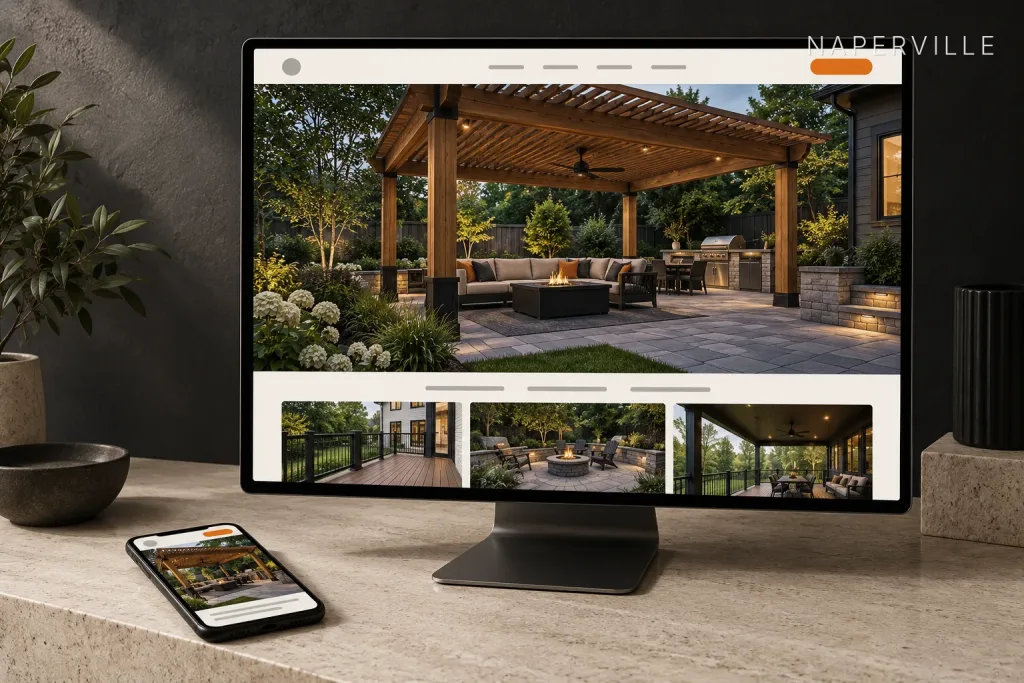
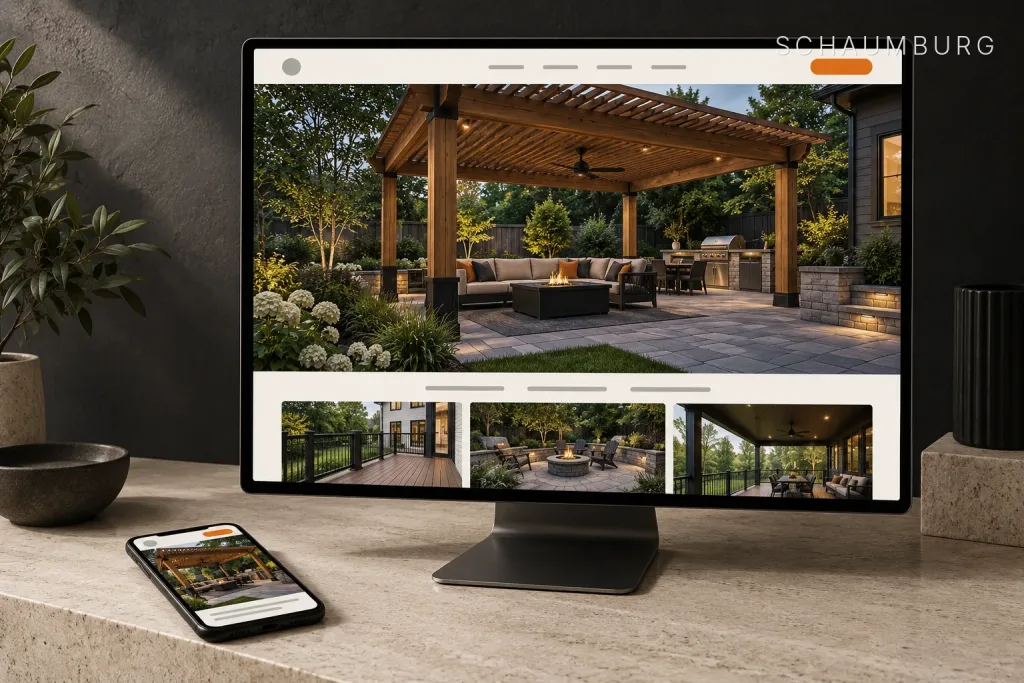
A project gallery is the single most convincing trust signal. Photos of completed work show a contractor's range and quality. Include images of kitchens, bathrooms, basements, or other rooms before and after the work. Captions that briefly describe the scope ("Kitchen remodel with custom cabinetry and quartz countertops") help visitors picture what is possible for their own home.
Case studies take this further. A short narrative about a project, the original problem, the solution, the result, demonstrates problem-solving ability. If the contractor worked through an unexpected issue like a hidden pipe or a load-bearing wall, explaining how they handled it builds trust. Visitors understand that surprises happen and want to know the contractor can manage them.
Share genuine reviews
Testimonials from past clients carry weight because they come from real people. Display them prominently, ideally on the homepage and the estimate request page. Include the client's name, project type, and a line or two about their experience. Video testimonials are even more powerful because they show emotion and authenticity that text cannot capture.
Third-party review platform badges (Google, HomeAdvisor, Angi) add another layer. A link to those profiles lets visitors verify the feedback themselves. Avoid cherry-picking only perfect reviews; a mix with a few less-than-perfect ones, followed by how the contractor resolved the issue, shows honesty and responsiveness.
Publish licence and insurance details
Contractors operate under state and local regulations. Licence information proves the business is legitimate and meets minimum competency standards. Insurance details (general liability, workers' compensation) reassure the homeowner that they are not financially liable if something goes wrong on the job site.
Display these on a dedicated "Licence & Insurance" page or in the footer. A simple statement like "Licensed in Illinois, general liability coverage up to $2 million" is enough. Do not bury this information where visitors have to hunt for it.
Offer a service guarantee
A written service guarantee signals confidence. It might cover workmanship for a set period, a promise to redo unsatisfactory work, or a fixed-price policy with no hidden fees. State the guarantee in plain language near the estimate request form. Even a short sentence like "We stand behind every job for 12 months" reduces the perceived risk of hiring an unknown contractor.
Guarantees are especially important for contractors who work on systems like HVAC, roofing, or foundation repair, where mistakes are costly and visible for years.
Maintain brand consistency
Brand consistency across the entire website builds subconscious trust. The same logo, colour palette, and typography should appear on every page. Mismatched design elements or outdated graphics suggest neglect. A professional look says the contractor pays attention to detail, a quality that carries over to their work.
Consistency also applies to tone. If the website is formal on the homepage but chatty on the contact page, the disconnect can feel off-putting. Choose a voice (professional, friendly, direct) and stick with it.
Make the website easy to use
Website usability directly affects whether a visitor fills out the estimate form. A site that loads slowly, works poorly on a phone, or hides the contact button frustrates people. They leave. Key usability elements include:
- Fast loading time, under three seconds on mobile and desktop.
- Clear navigation, the estimate request link should be in the top menu and repeated in the footer.
- Mobile-friendly layout, more than half of home-improvement searches happen on phones.
- Simple contact forms, ask only for name, phone, email, and a brief project description. Long forms make people walk away.
Test the site yourself on different devices. If a button is tiny or a form field does not autofill, fix it.

Provide clear next steps
A visitor who lands on a contractor website often has a specific problem: a leaky roof, an outdated bathroom, a cracked driveway. They want to know what happens after they click "Get an estimate." Outline the process in two or three bullet points: "1. Fill out the form. 2. We call within 24 hours to schedule a site visit. 3. You receive a detailed written estimate." This removes ambiguity and reduces anxiety about being pressured into a sale.
If the contractor offers a free consultation or a no-obligation quote, say so explicitly. The word "free" is a powerful trust signal when used honestly.
Lemur Marketing and contractor website design
A contractor website that incorporates these trust signals does not happen by accident. It requires deliberate design choices, attention to detail, and an understanding of what homeowners need before they commit. Lemur Marketing works with Chicagoland contractors to build sites that convert visitors into leads by focusing on these exact elements. Their approach centres on the user experience: making sure every page answers the visitor's unspoken questions and removes barriers to reaching out.
For contractors who serve the greater Des Plaines area, website design that prioritises trust signals can be the difference between a visitor who clicks away and one who fills out the estimate form. Lemur Marketing specialises in local SEO and Google Ads as well, but the foundation of any successful contractor site is the trust it builds before a single conversation takes place.
Common mistakes that erode trust
Avoid these pitfalls, which can undo the work of the trust-building elements above:
- Outdated content, a site that still mentions "Summer 2020 Special" looks abandoned.
- Broken links, especially to the estimate form or licence page.
- Generic stock photos, use real project images instead.
- No contact information, if the only way to reach the contractor is a form, visitors wonder whether anyone is there.
- Overly complex language, avoid jargon like "subfloor remediation" when "fixing a damaged subfloor" is clearer.
Each mistake tells the visitor that the contractor does not care about details. In a competitive local market, that impression can cost a job before the contractor even knows they were being considered.
Putting it all together
The goal of a contractor website is not just to look good. It is to answer the visitor's real question: "Can I trust this person to work in my home?" A project gallery shows competence. Testimonials and reviews show reliability. Licence and insurance details show legitimacy. A service guarantee shows confidence. Good usability shows respect for the visitor's time. Brand consistency shows professionalism. Clear next steps show transparency.
Each element reinforces the others. A beautiful gallery means little if the site is slow or the contact form is hidden. A strong guarantee loses impact if the testimonials are missing. A contractor website designed with all these pieces works as a coordinated system that moves a visitor from curiosity to action.
For contractors serving the Chicagoland area, investing in this kind of website design pays for itself in the quality of leads it generates. Homeowners who feel confident are more likely to book a site visit and more likely to say yes to the estimate.
Lemur Marketing is located at 1574 Henry Ave, Des Plaines, IL 60016, USA, and can be reached at +1 630-551-8493.
Lemur Marketing is also on YouTube.